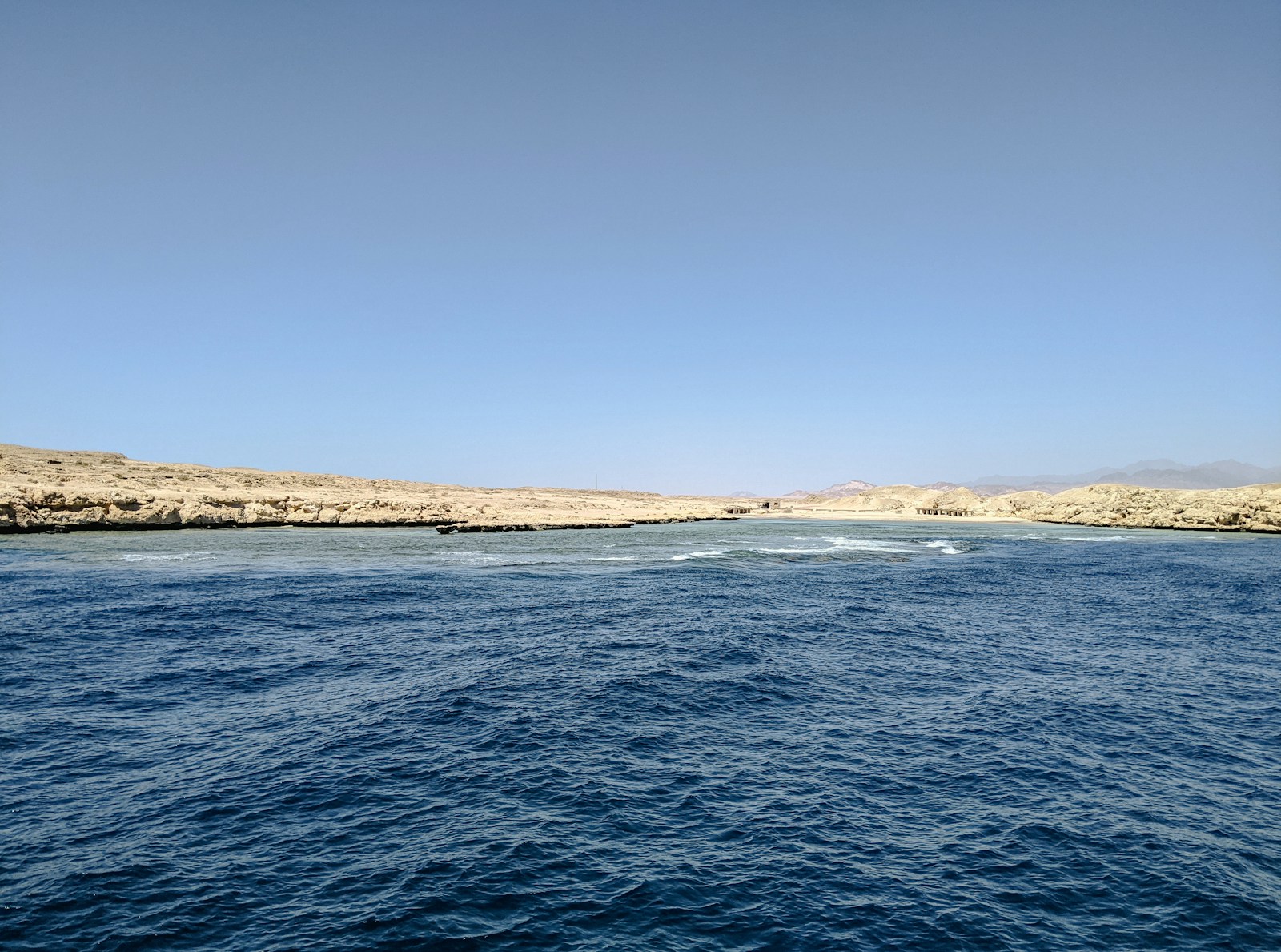
There is a narrow strip of water sitting between Iran and Oman that quietly controls a significant portion of the world’s energy supply every single day. It is not wide. At its narrowest point it is only about 33 kilometres across. Yet the decisions made around this waterway — by governments, navies, and oil tanker operators — ripple through fuel prices, economies, and geopolitics on every continent.
This is the Strait of Hormuz. And understanding what it is, what flows through it, and what its closure would mean is one of the most practical ways to make sense of why the Middle East remains the centre of global strategic tension.
What Is the Strait of Hormuz?
The Strait of Hormuz is a narrow waterway located between the Persian Gulf and the Gulf of Oman, connecting the oil-rich nations of the Middle East to the open waters of the Arabian Sea and ultimately the global ocean trade network.
Basic Geography
- Located between Iran to the north and the Oman peninsula (UAE and Oman) to the south
- At its narrowest point, the strait is approximately 33 kilometres wide
- The navigable shipping lanes are even narrower — two lanes of 3.2 kilometres each, one for inbound traffic and one for outbound, with a 3.2 kilometre buffer zone between them
- Connects the Persian Gulf to the Gulf of Oman
- Sits at the southeastern tip of the Arabian Peninsula
Which Countries Border It
- Iran to the north
- United Arab Emirates to the south
- Oman (the Musandam Peninsula) to the southeast
Iran holds the longest coastline along the strait, which is why it features so prominently in any discussion about its security and potential closure.
Why Is the Strait of Hormuz Important?
The strait’s importance comes down to one thing — oil and gas. The countries that produce the largest volumes of crude oil and liquefied natural gas in the world are landlocked within the Persian Gulf. The Strait of Hormuz is the only way out.
The Volume of Energy That Passes Through ItHere is the full detailed post:
Strait of Hormuz — Why It Matters, How It Works, and What Happens If It Closes
There is a narrow strip of water sitting between Iran and Oman that quietly controls a large portion of the world’s energy supply every single day. It is not wide. At its narrowest point it is only about 33 kilometres across. Yet the decisions made around this waterway — by governments, navies, and oil tanker operators — ripple through fuel prices, economies, and geopolitics on every continent.
This is the Strait of Hormuz. And knowing what it is, what flows through it, and what its closure would mean is one of the most practical ways to make sense of why the Middle East remains the centre of global strategic tension.
What Is the Strait of Hormuz?
The Strait of Hormuz is a narrow waterway located between the Persian Gulf and the Gulf of Oman, connecting the oil-rich nations of the Middle East to the open waters of the Arabian Sea and ultimately the global ocean trade network.
Basic Geography
- Located between Iran to the north and the Omani peninsula to the south
- At its narrowest point, the strait is approximately 33 kilometres wide
- The navigable shipping lanes are even narrower — two lanes of roughly 3.2 kilometres each, one for inbound traffic and one for outbound, with a buffer zone between them
- Connects the Persian Gulf to the Gulf of Oman and the Arabian Sea
- Sits at the southeastern tip of the Arabian Peninsula
Which Countries Border It
- Iran to the north — holding the longest coastline along the strait
- United Arab Emirates to the south
- Oman (the Musandam Peninsula) to the southeast
Iran’s geographic position along the northern shore is why it features so prominently in every discussion about the strait’s security and the threat of closure.
Why Is the Strait of Hormuz So Important?
The strait’s importance comes down to one thing — oil and gas. The countries that produce the largest volumes of crude oil and liquefied natural gas in the world are effectively landlocked within the Persian Gulf. The Strait of Hormuz is the only maritime exit.
The Volume of Energy That Passes Through It
In 2024, oil flow through the strait averaged 20 million barrels per day, equivalent to about 20% of global petroleum liquids consumption.
To put that in perspective — one in every five barrels of oil consumed anywhere in the world on any given day passed through a waterway that is barely 33 kilometres wide at its narrowest point.
Flows through the Strait of Hormuz in 2024 made up more than one-quarter of total global seaborne oil trade. In addition, around one-fifth of global liquefied natural gas trade also transited the Strait of Hormuz in 2024, primarily from Qatar.
Which Countries Export Through It
Oil flows through the Strait of Hormuz are heavily concentrated among a few Gulf producers. Saudi Arabia accounts for the largest share of crude and condensate exports transiting the strait at 37.2% of the total. Iraq follows with 22.8%, while the United Arab Emirates contributes 12.9%. Iran at 10.6% and Kuwait at 10.1% round out the top five exporters. Together these five countries account for 93.6% of all crude and condensate volumes moving through the strait.
Which Countries Receive That Oil
China alone accounts for 37.7% of total flows — more than any other country by a wide margin. India is the second-largest destination at 14.7%, followed by South Korea at 12.0% and Japan at 10.9%.
The United States imported about 0.5 million barrels per day of crude oil and condensate from Persian Gulf countries through the Strait of Hormuz in 2024, accounting for about 7% of total U.S. crude oil and condensate imports.
The picture is clear — a closure of the Strait of Hormuz would hurt Asia far more than any other region.
LNG — The Other Half of the Story
About 83% of the LNG that moved through the Strait of Hormuz in 2024 went from Persian Gulf countries to Asian markets. China, India, and South Korea were the top destinations, accounting for 52% of all Hormuz LNG flows in 2024.
Qatar is the dominant LNG exporter through the strait. Without access to the Strait of Hormuz, Qatar has no alternative route to deliver gas to the rest of the world.
How the Strait of Hormuz Works
The Shipping Lane System
The strait operates on a Traffic Separation Scheme — a structured one-way lane system similar in concept to a highway:
- One inbound lane for ships entering the Persian Gulf
- One outbound lane for ships exiting toward the Arabian Sea
- Each lane is approximately 3.2 kilometres wide
- A buffer zone separates the two directions of traffic
- Ships follow internationally agreed routes to avoid collisions in the narrow channel
On a normal day, roughly 130 to 140 vessels transit the strait. These include very large crude carriers (VLCCs) carrying up to 2 million barrels of oil each, LNG tankers, container ships, and military vessels from multiple nations.
Who Controls It
No single country owns or controls the Strait of Hormuz outright. The navigable shipping lanes pass through the territorial waters of both Oman and Iran. Under international maritime law — specifically the United Nations Convention on the Law of the Sea (UNCLOS) — ships have the right of transit passage through international straits used for international navigation. Iran disputes certain aspects of this framework and has historically claimed the right to regulate or restrict passage.
Iran’s Role and Military Presence
Iran’s Islamic Revolutionary Guard Corps Navy (IRGCN) maintains a heavy military presence in and around the strait. Iran has consistently used the threat of closing the strait as a geopolitical lever during periods of tension with the United States and its allies. Iran’s arsenal of anti-ship missiles, naval mines, fast-attack boats, and submarine capabilities make it the primary threat to free navigation through the waterway.
The United States maintains a significant counter-presence. The U.S. Navy’s Fifth Fleet, headquartered in Bahrain, is responsible for keeping the strait and surrounding waters open to international shipping.
What Happens If the Strait of Hormuz Closes?
This is no longer a theoretical question. Since February 28, 2026, following joint military strikes by the United States and Israel on Iran — which included the killing of Iran’s Supreme Leader Ali Khamenei — Iran’s Islamic Revolutionary Guard Corps issued warnings prohibiting vessel passage through the strait, leading to an effective halt in shipping traffic. Tanker traffic dropped by approximately 70% and over 150 ships anchored outside the strait to avoid the risks.
Here is what a closure — partial or full — means for the world.
Immediate Impact on Oil Prices
The moment a credible closure threat emerges, oil markets react before a single ship is blocked. During the current 2026 crisis, Brent crude prices spiked immediately after the strait was declared closed. A sustained, full closure would remove 20 million barrels per day from accessible global supply. There is no combination of emergency reserves and alternative producers that can replace that volume quickly.
Estimates from energy economists suggest a full closure lasting more than two weeks could push crude oil prices above $150 per barrel. An extended closure of several months could exceed $200 per barrel under certain demand conditions.
Are There Alternative Routes?
Only Saudi Arabia and the United Arab Emirates have operational crude pipelines that could potentially re-route flows to bypass the Strait of Hormuz, with an estimated 3.5 to 5.5 million barrels per day of available capacity.
- Saudi Arabia’s East-West Pipeline (Petroline): Runs from the Eastern Province to the Red Sea port of Yanbu. As of early 2026, it is estimated that about 2 million barrels per day of the pipeline’s capacity is in use, leaving between 3 and 5 million barrels per day of spare capacity depending on operational conditions.
- UAE’s Abu Dhabi Crude Oil Pipeline (ADCOP): Runs 400 kilometres from Habshan to the port of Fujairah on the Gulf of Oman, bypassing the strait entirely
- Iran’s Goreh-Jask Pipeline: Iran inaugurated this pipeline in 2021 to bypass the strait, but the pipeline and port effectively remain non-operational. A test load was exported from Jask in late 2024, but no further oil has been exported since then.
The combined bypass capacity covers only a fraction of normal Strait of Hormuz throughput. Even if Saudi Arabia and the UAE fully utilise their bypass pipelines, roughly two thirds of current Gulf crude exports remain physically dependent on the Strait of Hormuz. Iraq, Kuwait, and Qatar have no comparable alternative routes, leaving close to 14 million barrels per day structurally tied to a single maritime passage.
Impact on Asia
Asian economies would bear the heaviest consequences of any closure. China receives a third of its oil via the strait and had about a billion barrels in oil reserve — a few months of supply. Japan and South Korea have even less domestic energy production to fall back on. India, the world’s third-largest oil importer, sources a large portion of its crude from Gulf producers that depend entirely on the strait.
Industrial production slowdowns, fuel shortages, electricity generation disruptions, and sharp inflation across Asia would follow a prolonged closure.
Impact on Global Shipping and Trade
The effects extend beyond oil and gas. The Persian Gulf ports — including Jebel Ali in Dubai, one of the busiest container ports in the world — would become inaccessible for standard commercial shipping. Over 150 ships anchored outside the strait during the early days of the 2026 closure, waiting for safe passage. Container shipping delays would cascade into supply chain disruptions for electronics, automotive parts, and consumer goods across Europe and Asia.
Impact on Global Inflation
Energy touches everything. Higher oil prices feed directly into:
- Fuel and transport costs
- Manufacturing and production costs
- Food prices — through fertiliser costs and agricultural transport
- Electricity generation costs in oil-dependent economies
- Airline ticket prices and freight rates
A prolonged closure lasting several months would trigger inflation across most global economies, with lower-income countries and import-dependent nations hit hardest.
Military Escalation Risk
Any attempt to forcibly reopen the strait involves military confrontation with Iran. The U.S. Navy has the firepower to suppress Iranian naval and missile threats, but doing so carries the risk of broader regional escalation involving Iranian-backed groups in Iraq, Yemen, Lebanon, and Syria. On March 19, 2026, the United States Armed Forces began a military campaign to open the strait. The outcome of that campaign and its wider regional consequences remain actively developing at the time of writing.
Strategic Oil Reserves — How Long Do They Last?
Most major economies hold strategic petroleum reserves (SPRs) for exactly this kind of scenario:
- The United States holds roughly 350 to 400 million barrels in its Strategic Petroleum Reserve
- IEA member countries collectively hold reserves equivalent to roughly 90 days of net imports
- China’s strategic reserves are estimated at around 900 million to 1 billion barrels
These reserves buy time — they do not solve a prolonged closure. If the strait remained closed for more than 60 to 90 days, strategic reserves would begin running low in the most affected countries, forcing rationing, industrial cuts, and emergency energy policy responses.
Historical Threats and Incidents
The Strait of Hormuz has been a flashpoint repeatedly throughout modern history:
- 1980 to 1988 — Iran-Iraq War: Both sides attacked oil tankers in the Persian Gulf, drawing in U.S. Navy escorts in what became known as Operation Earnest Will (1987-1988)
- 1987 to 1988 — Operation Praying Mantis: U.S. and Iranian naval forces clashed directly after Iran mined international shipping lanes
- 2011 to 2012: Iran threatened to close the strait in response to Western sanctions over its nuclear programme — oil prices spiked in response
- 2019: A series of tanker attacks and seizures in and around the strait raised tensions to their highest point in years
- 2023 to 2024: Houthi attacks in the Red Sea redirected shipping routes and raised awareness of Persian Gulf chokepoint risks
- 2026: The most serious actual closure in modern history, triggered by U.S. and Israeli military strikes on Iran
Why Bangladesh Should Pay Attention
Bangladesh depends on imported energy — oil, LNG, and petroleum products — to power its industries, transport network, and electricity generation. A sustained closure of the Strait of Hormuz would:
- Drive up the import cost of fuel significantly
- Raise electricity generation costs for the national grid
- Increase the cost of goods transported by road and sea
- Put pressure on foreign currency reserves used to pay for energy imports
- Slow down export-oriented industries like garments that depend on stable energy supply
For a country that runs on imported energy, what happens in a 33-kilometre waterway on the other side of the Arabian Sea is not a distant geopolitical story — it is a direct economic concern.
Final Thoughts
The Strait of Hormuz is not just a geographic feature on a map. It is the single most concentrated point of energy vulnerability in the global economy. No other maritime passage carries an equivalent share of global energy demand. The Suez Canal handles diversified cargo streams, the Panama Canal serves container and bulk trades, but the Strait of Hormuz serves purely hydrocarbons.
The 2026 crisis has made visible what energy analysts have warned about for decades — that the entire structure of global oil and gas supply rests on a bottleneck narrow enough to be threatened by a single nation’s decision. The world is watching, and the consequences of what happens next in that 33-kilometre stretch of water will be felt from Tokyo to Dhaka to London.