
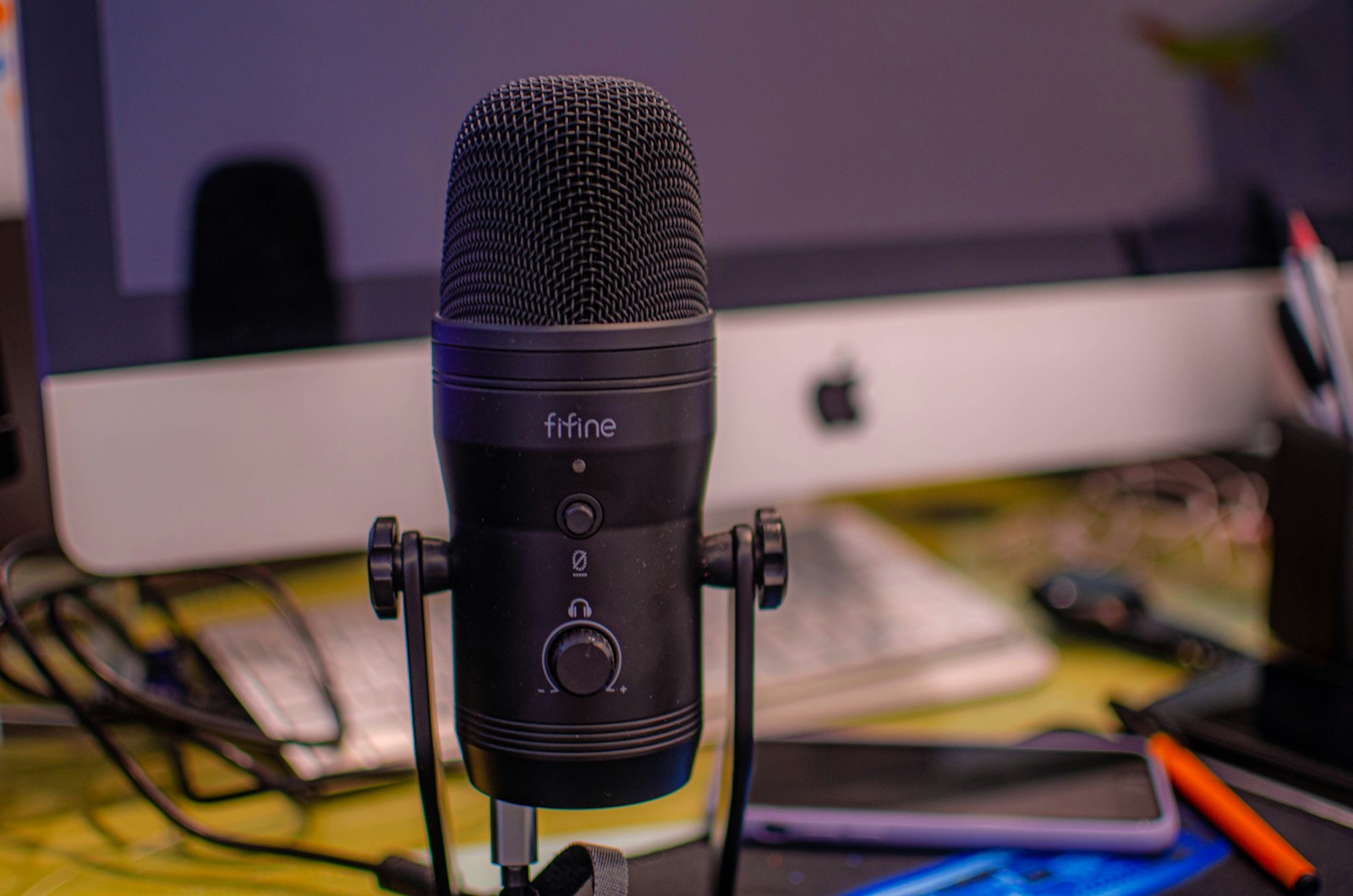
Dynamic microphones are everywhere. Popular YouTubers, podcasters, and streamers often recommend them, making many people believe a dynamic mic is automatically the “professional” choice for all situations. But here’s a truth that rarely gets discussed:
If most of your voice communication happens in Slack, a dynamic microphone is often the wrong choice.
For Slack calls, huddles, and voice messages, a condenser microphone usually performs better, sounds clearer, and causes far fewer technical headaches—especially for remote workers, freelancers, and distributed teams.
This article explains why dynamic mics struggle in Slack, why condenser mics work better, and how to choose the right mic for your actual use case.
The Real Problem: Slack Is Not a Podcast Studio
Slack audio is designed for quick calls, voice notes, and team huddles. It is not optimized for broadcast-quality audio chains. Slack commonly applies:
- Aggressive noise suppression
- Automatic gain control (AGC)
- Audio compression
- Echo cancellation
These features help laptop microphones and headsets sound acceptable, but they can work against dynamic microphones.
Why Dynamic Mics Perform Poorly in Slack
Dynamic microphones are designed for controlled environments like recording studios, podcast rooms, live stages, and streaming setups. They often require:
- Very close speaking distance (about 5–10 cm)
- High gain
- Clean preamps or an audio interface
Slack’s audio processing frequently clashes with these requirements.
1. Slack Struggles With Low-Gain Dynamic Mics
Dynamic mics output a much lower signal than condenser mics. As a result:
- Slack may think you’re too quiet
- Your voice can cut in and out
- Audio may be aggressively boosted and compressed
- Words can get clipped or sound muffled
Many users experience issues like “Slack can’t hear me” or “My voice drops randomly.”
2. Noise Suppression Can Eat Your Voice
Dynamic mics are loved for rejecting background noise, but Slack already applies heavy noise suppression. When both happen together:
- Slack may mistake your voice for background noise
- Quiet speech can disappear
- Your voice may sound flat and unnatural
Ironically, the mic designed to sound “clean” can end up sounding worse in Slack.
3. Dynamic Mics Require Perfect Technique
Dynamic microphones demand consistent distance and alignment. But Slack calls are casual—people lean back, turn their head, and move while talking. The moment you move away from a dynamic mic, your voice can drop dramatically.
Condenser mics are typically more forgiving for everyday work calls.
Why Condenser Mics Are Better for Slack
Condenser microphones are designed to capture voice more easily and pick up detail at moderate speaking distances. For Slack, this is a major advantage.
1. Condenser Mics Match Slack’s Audio Processing
Slack expects input similar to laptop microphones, headsets, and webcam mics. Condenser mics produce higher signal levels, so Slack processes them more naturally, with fewer dropouts and better consistency.
2. You Don’t Need an Audio Interface or Gain Boosters
Most USB condenser mics are plug-and-play and sound good immediately. Dynamic mics often require:
- Audio interfaces
- Extra gain
- Troubleshooting (sometimes even gain boosters)
For work communication, simplicity usually matters more than studio-style audio chains.
3. Better Clarity for Speech, Not Broadcasting
Slack is about understanding words clearly. Condenser mics typically provide better speech intelligibility, clearer consonants, and a more natural tone for meetings and calls.
Common Myth: “Dynamic Mics Are Always More Professional”
This idea comes from podcasting and streaming culture. Professional does not mean “best for every use case.”
A well-placed condenser mic in Slack will often outperform an expensive dynamic mic used casually.
When a Dynamic Mic Does Make Sense
Dynamic mics can be a great choice if you:
- Record podcasts regularly
- Stream live content
- Work in a very noisy environment
- Use an audio interface and control your full audio chain
- Do not rely mainly on Slack
But if Slack is your primary communication tool, these advantages often don’t apply.
Best Microphone Options for Slack Users
For most Slack-heavy users, the best choices are:
- USB condenser microphones
- Quality headset microphones
- Webcam microphones with good audio
These options are reliable, easy to use, and work well with Slack’s audio processing.
What Happens in Real Teams
Many teams see the same pattern:
- Someone buys a “pro” dynamic mic
- Slack call quality becomes worse
- Teammates complain about volume and clarity
- The user switches back to a condenser mic or headset
The issue is not skill—it’s often the mismatch between Slack and dynamic mic requirements.
Slack Is About Reliability, Not Audio Purism
For work communication, the best setup is the one that always works, sounds clear, and requires little to no troubleshooting. Condenser mics usually win in this category.
Final Verdict
Don’t buy a dynamic mic if Slack is your main communication tool. Buy a condenser mic instead.
Dynamic microphones are excellent, but they are not designed for Slack’s audio processing or casual work communication. Condenser microphones align better with Slack’s expectations and typical usage, making them the smarter choice for most Slack-heavy users.