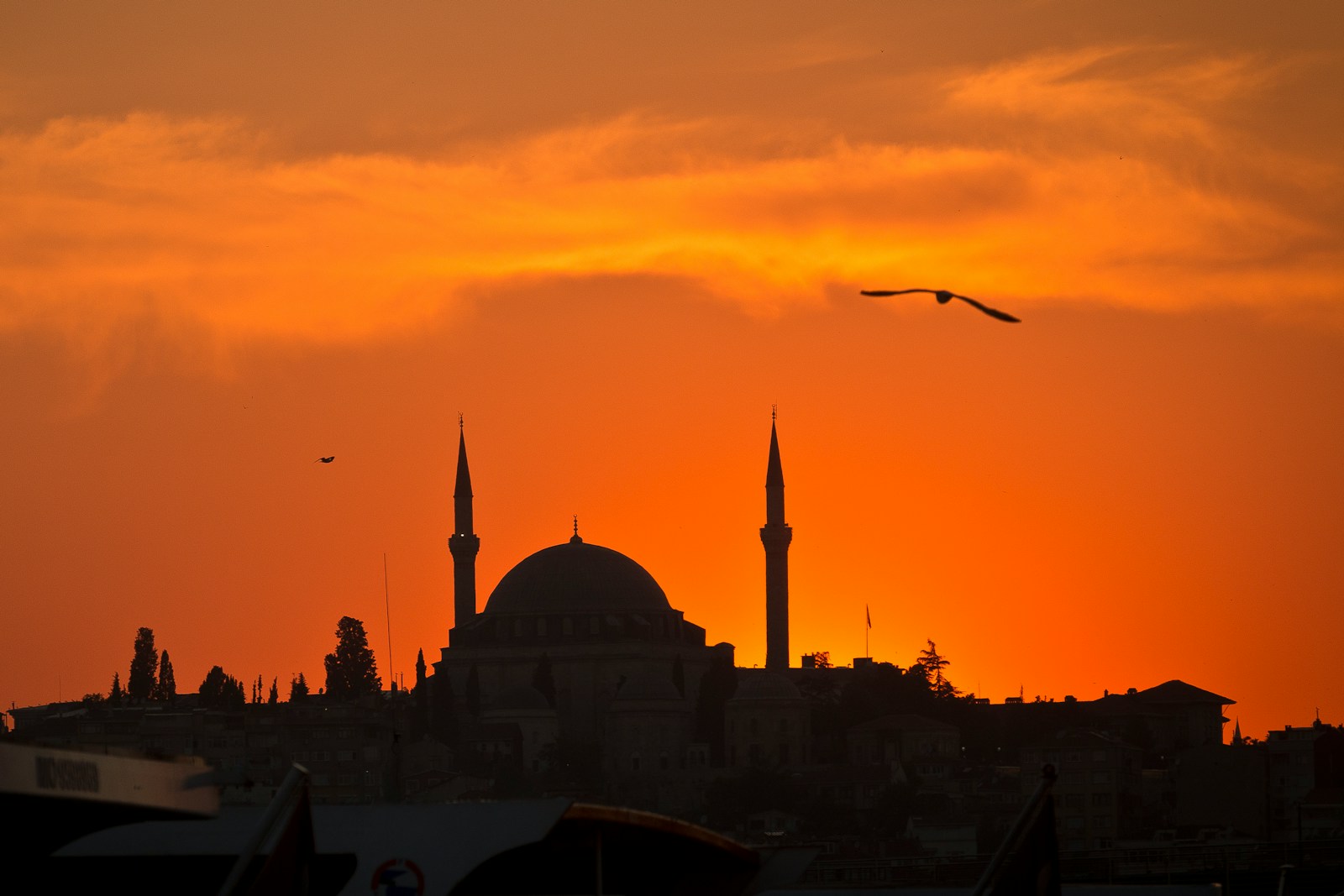
Every year, more than two billion Muslims around the world observe Ramadan — a month of fasting, prayer, reflection, and community. It is one of the most widely practiced religious traditions on Earth. Yet for many people outside the faith, the origins and history of Ramadan remain largely unknown. Where did it come from? How has it evolved over fourteen centuries? And what makes it so enduring?
This post takes you through the full history of Ramadan — from its earliest roots to the rich, global celebration it has become today.
What Is Ramadan?
Ramadan is the ninth month of the Islamic lunar calendar. Because the Islamic calendar follows the moon rather than the sun, Ramadan shifts roughly 10 to 11 days earlier each year relative to the Gregorian calendar. This means Ramadan rotates across all seasons over the course of a lifetime — sometimes falling in the heat of summer, other times in the cool of winter.
During Ramadan, Muslims who are physically able are required to fast from dawn (Fajr) to sunset (Maghrib) every day for the entire month. Fasting here means abstaining from food, drink, smoking, and sexual relations. But Ramadan is much more than physical abstinence — it is a month of heightened spiritual devotion, self-discipline, charity, and community.
The month ends with Eid al-Fitr, a joyful festival of breaking the fast, celebrated with prayers, feasting, gift-giving, and gratitude.
The Origins: A Night in a Cave
To trace the history of Ramadan, we have to go back to the year 610 CE, in the mountains surrounding the city of Mecca, in what is now modern-day Saudi Arabia.
According to Islamic tradition, the Prophet Muhammad — then a 40-year-old merchant known for his honesty and contemplative nature — was meditating in the Cave of Hira on Mount Jabal al-Nour. It was during the month of Ramadan that the Angel Jibreel (Gabriel) appeared to him and revealed the first verses of the Quran, the holy book of Islam. That night is known as Laylat al-Qadr, or the Night of Power, and is described in the Quran as “better than a thousand months.”
This single moment set the foundation for everything Ramadan would become. The month was no longer just a name on a calendar — it was now forever tied to divine revelation, the word of God, and the beginning of the Islamic faith itself.
When Fasting Became Obligatory: 624 CE
Although the first revelation occurred in 610 CE, fasting during Ramadan did not immediately become a religious obligation. That came fourteen years later, in 624 CE — two years after the Prophet Muhammad and his followers had migrated from Mecca to Medina in an event known as the Hijra.
It was in Medina that the community of Muslims began to take formal shape as a society. During this period, the Quranic verse that made fasting obligatory was revealed:
“O you who have believed, decreed upon you is fasting as it was decreed upon those before you that you may become righteous.” — Quran 2:183
This verse is historically significant for a few reasons. First, it formally instituted fasting as one of the Five Pillars of Islam — the core practices that every Muslim is expected to observe. Second, it acknowledged that fasting was not a new invention — it connected the Islamic practice to earlier Abrahamic traditions, including fasting in Judaism and Christianity. Third, it gave fasting a clear purpose: the attainment of taqwa, a concept that roughly translates to God-consciousness, mindfulness, and moral integrity.
Pre-Islamic Arabs had fasting traditions of their own — including fasting on the tenth of Muharram (the first Islamic month). But the Ramadan fast was distinct in its scope, its duration, and its spiritual framework. It was a month-long commitment tied to revelation, reflection, and community — not just individual ritual.
Ramadan in the Prophet’s Lifetime
During the Prophet Muhammad’s lifetime, Ramadan became a month of intense spiritual activity. He was known to increase his prayers, his charity, and his recitation of the Quran dramatically during this month. He also introduced the practice of Taraweeh — special night prayers performed after the obligatory Isha prayer, during which long portions of the Quran are recited.
Interestingly, Muhammad initially performed Taraweeh prayers in congregation at the mosque for a few nights, then stopped — fearing that if he continued, it might become an obligatory practice on his followers. After his death, he prayed these extra prayers at home.
Ramadan also witnessed several pivotal events in early Islamic history. The Battle of Badr, considered one of the most important military engagements in Islamic history, took place on the 17th of Ramadan in 624 CE. It was a victory for the early Muslim community against a much larger Meccan army and was seen as a sign of divine support. Later, the Conquest of Mecca in 630 CE also occurred during Ramadan — when Muhammad and his followers returned to Mecca and the city entered Islam largely without bloodshed.
After the Prophet: Standardizing Ramadan
Following the Prophet’s death in 632 CE, the early Muslim caliphs played a major role in shaping how Ramadan was observed across a rapidly expanding Islamic world.
Caliph Umar ibn al-Khattab (r. 634–644 CE) made one of the most lasting contributions to Ramadan practice. He revived and standardized the Taraweeh prayers in congregation at the mosque, unifying the community in night worship. He appointed a single imam to lead the prayers and ensured the full Quran would be recited over the course of the month — a tradition that continues in mosques around the world to this day.
As the Islamic empire expanded through the 7th and 8th centuries — stretching from Spain in the west to Central Asia in the east — Ramadan traveled with it. Different regions adopted the core practices while adding their own cultural expressions.
The Middle Ages: Ramadan Across Empires
Through the medieval period, Ramadan continued to be observed faithfully across the Islamic world, and it remained intertwined with major historical events.
In 1187 CE, the Kurdish-Muslim military leader Salahuddin Ayyubi (Saladin) launched his campaign against the Crusaders — culminating in the liberation of Jerusalem — a feat that Muslims have long associated with the blessings of Ramadan. In 1260 CE, the Mamluk forces of Egypt delivered one of the most significant military upsets of the medieval era, defeating the Mongols at the Battle of Ain Jalut on the 26th of Ramadan — halting the Mongol advance into the heart of the Arab world.
These events deepened the association between Ramadan and perseverance, triumph, and divine favor.
One charming innovation emerged during the Mamluk era in Egypt in the 15th century: the tradition of firing a sunset cannon to signal the time of Iftar, the fast-breaking meal at sunset. According to popular accounts, this began almost by accident — a sultan was testing a new cannon just as the sun set during Ramadan, and the city took the booming sound as a signal to break their fast. The tradition caught on, spread across the region, and endured for centuries. Even today, cannon firings at Iftar remain a cherished tradition in countries like Egypt, Jordan, the UAE, and Kuwait.
Ramadan Around the World: Cultural Diversity Within Unity
One of the most remarkable things about Ramadan is how a single religious observance has taken on hundreds of different cultural expressions over the centuries. The core remains the same everywhere — fasting, prayer, Quran recitation, and charity — but the flavors, sounds, and customs vary enormously by region.
In the Middle East, Ramadan evenings are a festive affair. Streets come alive after Iftar, with families visiting one another, mosques overflowing with worshippers, and markets staying open late into the night. Traditional sweets like qatayef and kunafa appear only during this month.
In South and Southeast Asia, countries like Indonesia, Malaysia, Pakistan, and Bangladesh observe Ramadan with enormous communal energy. Indonesia — home to the world’s largest Muslim population — has its own pre-dawn tradition called sahur on the road, where communities gather to share the pre-dawn meal in public spaces. Colorful lanterns decorate streets across Malaysia during the holy month.
In West Africa, Ramadan is deeply tied to community and hospitality. In Senegal, Gambia, and Nigeria, elaborate communal Iftars and the spirit of sharing food with neighbors define the month. The West African practice of preparing large communal meals reflects Ramadan’s emphasis on generosity.
In Turkey, the tradition of the davulcu — a drummer who walks through neighborhoods before dawn to wake people for Suhoor (the pre-dawn meal) — dates back centuries to the Ottoman era and still continues in many cities today.
The Spiritual Heart of Ramadan: More Than Hunger
Across all these centuries and all these cultures, what has kept Ramadan so deeply alive?
The answer lies in what the fast is meant to do internally. Ramadan is not about suffering or deprivation — it is about resetting. It asks people to step back from ordinary comforts and habits, to feel hunger so they can empathize with those who feel it every day, to slow down enough to reflect on what truly matters, and to return to prayer, gratitude, and community.
The last ten nights of Ramadan — particularly the odd-numbered nights — are considered the holiest period, as Muslims believe Laylat al-Qadr falls within them. Many spend these nights in extended prayer and Quran recitation, seeking spiritual renewal in what is described as a night whose blessings surpass a lifetime of ordinary worship.
Ramadan concludes with Eid al-Fitr — a celebration of gratitude and joy. Before the Eid prayer, Muslims are required to give Zakat al-Fitr, a mandatory charity to ensure that even the poorest members of the community can celebrate.
Conclusion: 1,400 Years and Counting
From a quiet night of revelation in a mountain cave to a globally observed month of faith and community, Ramadan has traveled an extraordinary journey through history. It has been shaped by prophets, caliphs, empires, scholars, and ordinary families — each generation passing it on to the next with devotion and care.
Today, Ramadan is observed in virtually every country on Earth, in towering mosques and modest homes, in desert cities and arctic communities. Its message — of discipline, gratitude, empathy, and renewal — has proven timeless across fourteen centuries.
Whether you observe Ramadan yourself or are simply learning about it for the first time, one thing is clear: this month carries within it one of the longest unbroken threads of human spiritual practice in recorded history. And that, by any measure, is something remarkable.