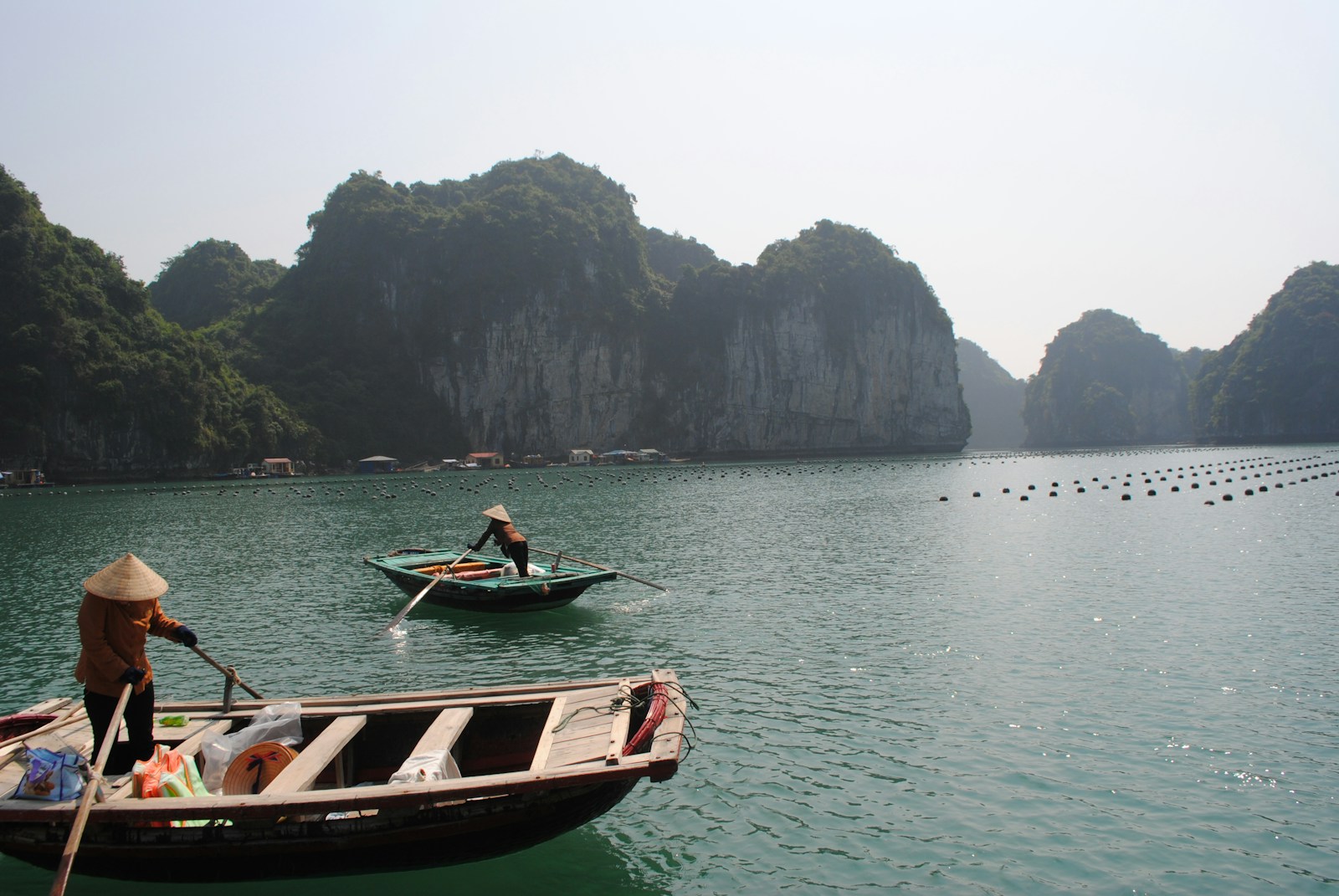
Asia is home to more than four billion people — over half the world’s population. It spans the frozen tundra of Siberia, the Himalayan peaks, the monsoon plains of South Asia, the river deltas of Southeast Asia, and the Pacific island chains of the far east. No continent on Earth holds more geographic, ecological, and human diversity. And no continent is facing the consequences of climate change with greater intensity.
The World Meteorological Organization’s State of the Climate in Asia 2024 report warns that the region is warming nearly twice as fast as the global average, driving more extreme weather and posing serious threats to lives, ecosystems, and economies.
This is not a distant projection. It is already happening — in the form of record heatwaves, accelerating glacier melt, rising seas, intensifying cyclones, and deepening droughts across countries that are home to billions of people who had the least to do with causing the problem.
Asia Is Warming Twice as Fast as the Global Average
Asia is warming at nearly twice the global average rate, with the warming trend in the past 23 years almost double that during the 1961 to 1990 period. In 2024, prolonged heatwaves affected most of the continent, with temperatures 1.04 degrees Celsius above the 1991 to 2020 average.
The continent is warming twice as fast as the global average because of its large landmass — temperatures over land increase more quickly than over the oceans. The consequences of this accelerated warming are not uniform across Asia. Some regions face catastrophic flooding while others face devastating drought. Some are losing their water supply as glaciers vanish while others are watching their coastlines sink beneath rising seas.
Climate change could lead to a 17% GDP drop across Asia and the Pacific region by 2070 under a high-end emissions scenario, which could rise to 41% of GDP by the end of the century. These are not abstract economic projections — they represent the livelihoods, food security, and futures of billions of ordinary people.
The Heatwave Crisis Across Asia
Heat is the most immediately visible face of climate change in Asia. The heatwaves of 2024 were historic in scale and severity, affecting virtually every sub-region of the continent simultaneously.
Record Temperatures in 2024
In April 2024, China broke the average temperature record for that month. The following month it was the same — and then again in August, September, and November.
Throughout April and continuing into May 2024, extreme record-breaking heat led to severe impacts across the Asian continent. From Israel, Palestine, Lebanon, and Syria in the west to Myanmar, Thailand, Vietnam, and the Philippines in the east, large regions of Asia experienced temperatures well above 40 degrees Celsius for many days.
Who Bears the Heaviest Burden
The heat was particularly difficult for people living in refugee camps and informal housing, as well as for outdoor workers. Hundreds of deaths have been reported in most of the affected countries, including Palestine, Bangladesh, India, Thailand, Myanmar, Cambodia, and the Philippines. The heat also had a large impact on agriculture, causing crop damage and reduced yields, as well as on education, with school holidays having to be extended and schools closed in several countries, affecting millions of students.
How Much More Likely Are These Heatwaves Now
Extreme temperatures in South Asia are now about 45 times more likely and 0.85 degrees Celsius hotter than they would have been without climate change. A heatwave that once occurred once in several decades is now a near-annual event across large parts of the continent.
A McKinsey report found that up to a billion people alone could be exposed to lethal heatwaves by 2050. At that scale, heat becomes a threat not just to human health but to the entire economic and social fabric of the region.
Glacier Melt — Asia’s Water Towers Are Disappearing
The Himalayas, the Hindu Kush, the Karakoram, the Tian Shan, and the Tibetan Plateau together hold the largest concentration of glacial ice outside the polar regions. These mountain glaciers are the source of the rivers that provide fresh water to more than two billion people across South Asia, Central Asia, and China — the Ganges, the Brahmaputra, the Indus, the Yangtze, the Yellow River, the Mekong, and dozens of others.
What Is Happening to the Glaciers
Reduced winter snowfall paired with extreme summer heat accelerated glacier mass loss in the central Himalayas and Tian Shan in 2024.
Glaciers in the central Himalayas and Tian Shan suffered severe mass loss, contributing to rising hazards such as glacial lake outburst floods and landslides, and jeopardising long-term water security.
The Glacial Lake Outburst Flood Threat
As glaciers melt, the water pools into glacial lakes held back by unstable moraine dams. When these dams fail — triggered by landslides, earthquakes, or simply the weight of accumulated water — they release catastrophic floods known as glacial lake outburst floods (GLOFs).
More than 15 million people globally are highly vulnerable to the impacts of GLOFs, with India, Pakistan, Peru, and China facing the greatest risk. A GLOF from India’s South Lhonak Lake in October 2023, compounded by dam failure, caused 46 fatalities and displaced nearly 90,000 people across Sikkim, West Bengal, and northern Bangladesh. The flood destroyed critical infrastructure including bridges and highways, leaving many communities isolated and without essential services.
The Long-Term Water Security Problem
The immediate danger from GLOFs is matched by a longer-term threat — the permanent loss of water storage. Glaciers act as natural reservoirs, releasing meltwater slowly through summer when snowfall is low. As they disappear, rivers that currently provide year-round flow will become seasonal, creating intense flooding during melt season and severe water scarcity for the rest of the year.
Countries including Pakistan, Afghanistan, Nepal, and the Central Asian republics face this future within the coming decades. The agricultural systems, cities, and energy infrastructure of the region are built around river flow patterns that are already changing faster than adaptation capacity can respond.
Rising Seas — Asia’s Coastlines Under Threat
Sea level rise in the Pacific and Indian Oceans exceeded the global average in 2024, increasing risks for low-lying coastal areas.
Sea levels rose faster than expected around the world in 2024 — Earth’s hottest year on record — with NASA attributing the rise to warming oceans and melting glaciers. The UN has warned of threats to vast numbers of people living on islands or along coastlines, with low-lying coastal areas of India, Bangladesh, China, and the Netherlands flagged as areas of particular concern, as well as island nations in the Pacific and Indian Oceans.
Which Asian Countries Face the Greatest Risk
Mainland China, Bangladesh, India, Vietnam, Indonesia, and Thailand are home to the most people on land projected to be below average annual coastal flood levels by 2050. Together, those six nations account for roughly 75% of the 300 million people on land facing the same vulnerability at midcentury.
Several densely populated Asian countries, including the Philippines, Indonesia, and Bangladesh, are at especially high risk of being impacted by sea level rise and both coastal and riverine flooding. This is particularly concerning because several fast-growing megacities lie along the coast, including Jakarta, Manila, and Dhaka.
Bangladesh — The Most Exposed Nation on Earth
Bangladesh represents the starkest example of climate vulnerability on the continent. Despite producing only 0.3% of global greenhouse gas emissions, Bangladesh ranks ninth on the 2024 World Risk Index of countries vulnerable to extreme weather and other climate impacts. From 2000 to 2019, Bangladesh suffered economic losses worth $3.72 billion and witnessed 185 extreme weather events due to climate change.
A staggering two-thirds of Bangladesh is less than 15 feet above sea level, and about a third of the population lives by the coast. A 2018 US government report found that 90 million Bangladeshis — 56% of the population — live in high climate exposure areas, with 53 million subject to very high exposure.
Stronger downpours — combined with rising temperatures melting the Himalayan glaciers that feed rivers around Bangladesh — are leaving massive swaths of the country far more prone to devastating floods. Increasingly, supercharged water levels in the Ganges-Meghna-Brahmaputra River Basin are destroying entire villages and hundreds of thousands of livelihoods, contributing to over 10 million Bangladeshis already being climate refugees.
Today, one in every four Bangladeshis lives on land that could flood at least once a year, on average, by 2050.
The Sundarbans Are Disappearing
The Sundarbans — the world’s largest mangrove forest, shared between Bangladesh and India — is one of the most biodiverse ecosystems on Earth and a natural barrier protecting millions of coastal inhabitants from cyclone storm surges. Rising seas are steadily inundating the Sundarbans’ low-lying islands. Several islands have already been permanently submerged. The ecosystem that protects the coast is itself being destroyed by the rising sea it is supposed to buffer against.
Extreme Rainfall, Flooding, and Cyclones
Record Flooding Across the Region
Extreme rainfall and flooding events brought widespread death and destruction in many eastern Asian countries in 2024, including Pakistan which had its wettest April on record, Kazakhstan where the rapid melting of a heavy snowpack inundated entire cities, the United Arab Emirates which saw its heaviest rainfall event since records began in 1949, as well as Bahrain, Oman, and Iran. South Asia’s monsoon season also brought extreme rainfall events, with widespread flooding affecting Nepal, India, and Pakistan.
Between 26 and 28 September 2024, Nepal experienced extreme rainfall which created landslides and flooding across large swaths of the country. 246 people were killed, 178 injured, and over 200 were missing in the wake of the climate emergency.
Record-breaking flooding in Central Asia in 2024 was the worst in over 70 years.
Typhoons and Cyclones Are Getting Stronger
Tropical Cyclone Yagi, the strongest storm of 2024, caused widespread damage and casualties across multiple countries.
Warmer sea surface temperatures are the direct driver of more intense tropical storms. As the Indian and Pacific Oceans warm beyond historical records, the energy available to fuel cyclones and typhoons increases. The result is storms that intensify faster, carry more rainfall, and maintain their strength longer after landfall — all patterns that scientific research has now directly linked to ocean warming driven by climate change.
Drought, Food Security, and Agricultural Collapse
While some parts of Asia drown, others dry out.
China’s Water Crisis
A summer-long drought in China affected over 4.76 million people and damaged hundreds of thousands of hectares of crops.
Around the same time that Pakistan was flooded, China experienced a record-breaking heatwave followed by its worst drought on record, leading to widespread water shortages in the country’s rich southern agricultural regions. Local authorities called for measures to use every unit of water carefully, sparking fears of global food shortages. China’s climate-connected water supply gap could reach 25% by 2030.
The Agricultural Threat to Asia’s Food Supply
The region accounts for around two-thirds of global food production. Agriculture and food systems are inherently vulnerable to the fluctuations and shifts brought on by climate variability and change. Climate effects on agriculture will disproportionately affect poor and vulnerable communities, as a majority of poor people in the Asia and Pacific region depend on agriculture for livelihoods.
Projections indicate that wheat may have yield reductions exceeding 40% in major countries of South Asia and maize may have reductions exceeding 20% in much of Asia by 2100 under a high-end emissions scenario.
Rice — the staple crop for over three billion people across Asia — faces compounding threats from heat stress during flowering, saltwater intrusion in coastal growing regions, and altered monsoon patterns that disrupt planting and harvest cycles.
Country-by-Country Impact Breakdown
India
India faces simultaneous threats from rising seas along its eastern and western coastlines, intensifying monsoon variability that produces both extreme flooding and drought in the same season, lethal heatwaves across its interior plains, and glacier melt threatening the rivers that sustain its agriculture and cities. Northern Kerala experienced a fatal landslide which killed over 350 people following record rainfall. With over 1.4 billion people and a large agricultural sector, India’s climate vulnerability has global food security implications.
Pakistan
Pakistan sits at the intersection of multiple climate threats — Himalayan glacier melt flooding its river system, extreme monsoon rainfall causing catastrophic flooding, and severe drought in its southern and western regions. The 2022 floods submerged one-third of the country, killing over 1,700 people and causing $30 billion in damages. Climate scientists described it as a preview of Pakistan’s climate future rather than an exceptional event.
China
China’s scale means its climate impacts play out across an enormous range of geography — from the flooding of its river basins to drought in its southern agricultural heartland, from the melting of its Tibetan Plateau glaciers to the rising seas threatening its densely populated eastern coastal cities including Shanghai and Guangzhou. China broke its average monthly temperature records multiple times in 2024 — in April, May, August, September, and November.
Indonesia and the Philippines
Both archipelago nations face existential pressure from sea level rise, intensifying typhoons, and coral reef destruction. Jakarta — Indonesia’s former capital — was sinking so rapidly from groundwater extraction combined with sea level rise that Indonesia relocated its capital to Nusantara in Borneo. The Philippines experiences an average of 20 typhoons per year, a number and intensity that is trending upward with ocean warming.
Vietnam
Vietnam’s Mekong Delta — one of the most productive agricultural regions in Asia — faces saltwater intrusion from rising seas that is destroying rice paddies and fresh water supplies at an accelerating rate. Vietnam is among the six nations accounting for roughly 75% of the 300 million people facing coastal flood vulnerability by 2050.
Central Asia
Kazakhstan experienced the worst flooding in 70 years in 2024, caused by the rapid melting of a heavy snowpack. Central Asian nations face a particularly stark version of the glacier melt crisis — their water supply is almost entirely dependent on mountain glaciers that are disappearing faster than projections anticipated even a decade ago.
Pacific Island Nations
The Maldives, Tuvalu, Kiribati, and the Marshall Islands face the most existential threat of any nations on Earth — complete submersion. These nations contribute negligibly to global greenhouse gas emissions yet face the loss of their entire territory within the lifetimes of children alive today. Several Pacific nations have already begun negotiating territory and citizenship arrangements with neighbouring countries as the prospect of national disappearance becomes a planning reality rather than a distant hypothetical.
The Human Cost — Climate Migration Across Asia
Climate change is already one of the primary drivers of internal migration across Asia — a pattern that will intensify dramatically over coming decades.
By one estimate, up to 50% of those now living in Bangladesh’s urban slums may be there because they were forced to flee their rural homes as a result of riverbank flooding. A study of 1,500 Bangladeshi families migrating to cities — mainly Dhaka — showed that almost all of them cited the changing environment as the biggest reason for their decision.
Up to 400,000 more people arrive in Dhaka every year. When these migrants move into big cities, they do not find refuge from rural climate challenges but rather more and at times worse problems — forced to settle into densely populated urban slums with rudimentary housing conditions, poor sanitation, and limited economic opportunities.
This pattern — rural climate displacement feeding urban overcrowding which creates new urban climate vulnerability — is playing out simultaneously across Bangladesh, India, Pakistan, Vietnam, the Philippines, and Indonesia. It is one of the defining humanitarian dynamics of the 21st century.
What Asia Is Doing in Response
Early Warning Systems
Comprehensive national protocols on emergency funding and early flood warning systems in Nepal enabled communities to prepare for evacuation and crisis responders to reach the worst-hit regions quickly during the 2024 flooding. The mayor of one affected municipality noted it was the first time in 65 years flooding was that bad, yet zero casualties resulted thanks to preparedness and rescue measures.
National Adaptation Plans
Bangladesh launched its Delta Plan 2100 — a long-term national strategy for managing water, land, and climate risk across its delta geography. India has National Action Plans for climate adaptation covering water, agriculture, forests, and coastal zones. China has committed to carbon neutrality by 2060 under its national climate targets.
Regional Cooperation Gaps
Despite individual national efforts, Asia lacks the kind of binding regional climate cooperation framework that the situation demands. Shared river basins — the Mekong, the Indus, the Brahmaputra — cross multiple national borders, meaning that upstream decisions about dams, water extraction, and land use directly affect downstream nations with no formal obligation to coordinate.
What Asia’s Climate Future Looks Like Without Action
The trajectory without significant emissions reduction is severe and specific:
- Permanent inundation of coastal Bangladesh, Vietnam’s Mekong Delta, and low-lying Indonesian and Philippine islands before 2100
- Collapse of Himalayan glacier systems eliminating dry-season river flow for hundreds of millions of people
- Annual lethal heatwaves across South and Southeast Asia making outdoor work impossible for significant parts of the year
- Monsoon system disruption creating alternating catastrophic flooding and severe drought within the same agricultural season
- Mass displacement of hundreds of millions of people from coastal and riverine zones with no planned destination
Under a high-end emissions scenario, climate change could reduce Asia-Pacific GDP by 41% by the end of the century — a number that represents not just economic loss but the collapse of development gains that have lifted hundreds of millions out of poverty over the past five decades.
Why This Matters for Bangladesh Specifically
Bangladesh is simultaneously one of the most vulnerable countries on Earth and one of the least responsible for the emissions driving the crisis. Despite producing only 0.3% of global greenhouse gas emissions, Bangladesh ranks ninth on the 2024 World Risk Index of countries vulnerable to extreme weather.
The country’s geography — a low-lying delta at the confluence of three major river systems, open to the Bay of Bengal — makes it structurally exposed to every major category of climate impact simultaneously: flooding, cyclones, sea level rise, saltwater intrusion, and glacier-fed river surge.
The garment industry — Bangladesh’s primary economic engine and export earner — depends on stable infrastructure, consistent energy supply, and a workforce that can physically commute and work. All of these are threatened by intensifying climate impacts. The economic cost of climate change for Bangladesh is not an abstract future risk — it is a current and compounding reality.
Final Thoughts
Asia’s climate story is the world’s climate story. The continent that is home to most of humanity is warming faster than anywhere else, losing its glaciers faster than models predicted, watching its coastlines shrink and its extreme weather intensify — all while hosting the populations least equipped financially to adapt and least responsible historically for the emissions causing it.
The data from 2024 alone — record temperatures across China, record flooding in Central Asia, record cyclone intensity, accelerating glacier loss, rising seas — is not a one-year anomaly. It is the new baseline from which each subsequent year will likely diverge further.
The consequences are not contained within Asia’s borders. The food production, manufacturing, and supply chains of the entire global economy run through this continent. What happens to Asia’s climate happens to the world.